
Java4Shell (CVE-2026-114938) is a heap overflow in OpenJDK’s Base64 decoder. On affected servers, a specially crafted string of Base64 text can corrupt memory and, in some applications, let an attacker run code before anyone logs in. Oracle and the OpenJDK project released fixes on 17 November 2026. If you run Java 17, 21, 25 or 27 on modern Intel or AMD servers, you need to find every copy and update it.
Watch the 60-second version first, or read on for the full guide.
What is Java4Shell?
Base64 is a way of turning data into plain text characters so it can travel safely through web requests, tokens and APIs. Java has a built-in decoder for it, and on newer processors that decoder uses a speed shortcut built on AVX-512 instructions.
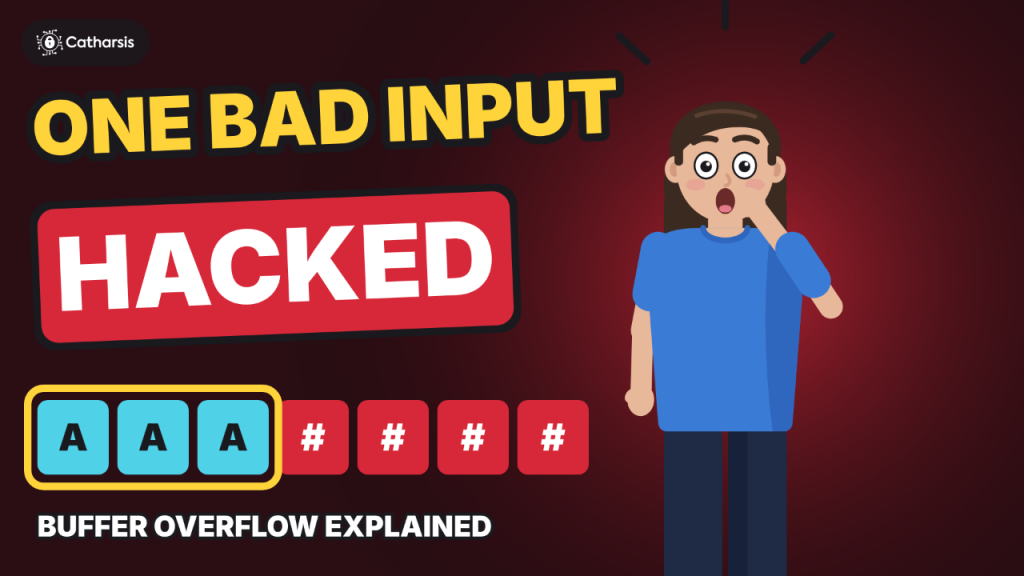
Java4Shell is a bug in that shortcut. A crafted Base64 string makes the decoder write past the end of the memory it was given, a classic buffer overflow. The researchers at Calif, who found it, showed two possible outcomes: reading application memory, which can expose keys or tokens, and running the attacker’s own code.
Details of the flaw leaked before a fix was ready. Calif confirmed it on 17 November 2026, and Oracle shipped fixes the same day in its November Critical Security Patch Update.
How serious is it?
- Severity: Oracle rates it CVSS 3.1 8.1, with high attack complexity. Calif scores it 9.2 under CVSS 4.0.
- Before login: in Calif’s testing, code execution was possible before authentication on Keycloak, Atlassian Jira and Confluence, Jenkins, JFrog Artifactory and PingFederate, and after login on products including Apache Kafka, Apache Solr and Elasticsearch.
- Exploitation: as of 17 November, Tenable reported no known exploitation in the wild, and the flaw was not in CISA’s Known Exploited Vulnerabilities catalogue. A public proof of concept triggers the bug but does not take control of the system.
The honest summary: it is hard to exploit, but its reach is enormous, because Java sits underneath a huge share of business software.
Who is affected?
Three conditions all have to be true:
- An affected Java version. The OpenJDK Vulnerability Group lists the 17, 21, 25 and 27 release lines. Calif says OpenJDK 17.0.6 and later are affected. Standard Java 8 and 11 are not listed by OpenJDK. Builds from other vendors based on OpenJDK, such as Eclipse Temurin, Amazon Corretto and Azul Zulu, may be affected too: check each vendor’s advisory.
- The right processor. An x86-64 CPU with AVX-512 VBMI support. ARM64 servers are not affected.
- A path for untrusted input. The application has to pass attacker-controlled Base64 data to the affected decoder, for example through a web request or login flow. Each application needs its own exploit.
How to check if you’re exposed
- Run java -version with each service’s own runtime, not just the one on the system path. Many applications ship their own Java.
- On Linux, check whether the CPU supports the instructions: look for avx512vbmi in /proc/cpuinfo.
- Don’t forget container images and vendor appliances. A Java runtime baked into an image stays vulnerable until the image is rebuilt.
What to do now
- Update every Java runtime, then restart. Oracle’s fixed builds are 17.0.21.1, 21.0.13.1, 25.0.5.1 and 27.0.1.1 (and 8u513-perf for the Java 8 Enterprise Performance Pack). Other distributions publish their own fixed versions. A running service keeps the old code in memory until it restarts.
- Can’t patch yet? Calif identified the JVM option -XX:-UseBASE64Intrinsics, which switches the risky shortcut off, or -XX:UseAVX=2, which disables AVX-512 (x86-64 only: Java on ARM won’t start with it). Neither is in Oracle’s or OpenJDK’s advisory, so treat them as a stopgap, restart, and confirm the setting with jcmd VM.flags.
- Shrink the exposure. Keep admin and build tools like Jenkins, Jira and Artifactory off the public internet, behind a VPN and single sign-on.
- Watch for warning signs. Alert on Java services that crash repeatedly or start command shells: a failed exploit attempt often crashes the application.
Why bugs like this keep happening
Java4Shell is the latest in a long line of buffer overflows, from the Code Red and Slammer worms to Heartbleed. When one shared component is flawed, every application built on it inherits the problem, which is why the first job is always finding every copy. Our full breakdown explains how these attacks work and how to defend against the whole class:
FAQ
Is Java 8 or Java 11 affected by Java4Shell?
Standard Java 8 and 11 are not listed by the OpenJDK Vulnerability Group. Oracle lists a Java 8 Enterprise Performance Pack build. Check your vendor’s advisory for your exact build.
Are ARM servers affected?
No. According to Calif, the flaw is in a shortcut that only runs on x86-64 processors with AVX-512 VBMI support.
Is Java4Shell being exploited?
As of 17 November 2026, Tenable reported no known exploitation in the wild, and it was not in CISA’s KEV catalogue. That can change quickly, so patch rather than wait.
How Catharsis can help
Catharsis Cyber Security is an ISO 27001:2022-certified MSP/MSSP helping businesses stay secure. We find every hidden Java runtime across your servers, containers and appliances, patch and verify it, and watch for signs of exploitation around the clock. See our vulnerability management service or talk to us.